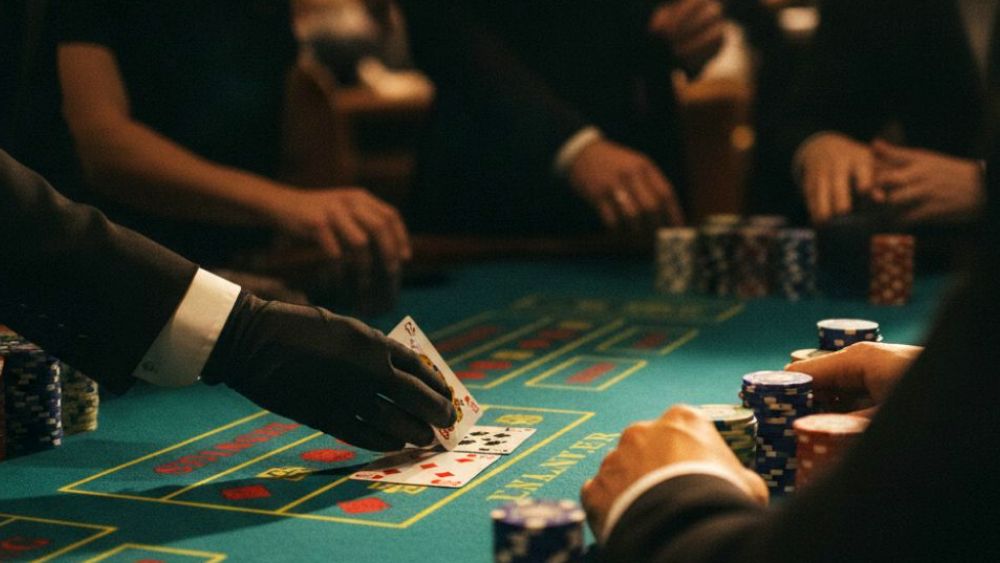
Why Basic Strategy Is Your Best Weapon at the Blackjack Table
Blackjack is not a game of pure luck. Unlike slots or roulette, your decisions directly influence the outcome. That's why sharp players in the Philippines rely on basic strategy – a mathematically proven set of moves that tells you exactly what to do with any hand against any dealer upcard. It won't guarantee a win every session, but it slashes the house edge to around 0.5% when played perfectly.
Most Filipino bettors lose more than they should because they go with their gut. "I have a feeling the dealer is going to bust," they think, and stand on 12 against a 2. That feeling costs money. Basic strategy removes emotion and replaces it with cold, hard math. In this guide, we break down seven rules that cover the most common – and most costly – situations you'll face at the table.
Before we dive in, remember that these rules assume a standard game: 6 to 8 decks, dealer stands on soft 17, double after split allowed. Some variations exist, but this covers the vast majority of tables you'll find in Manila, Cebu, and online. Ready? Let's go.
Rule 1: Always Split Aces and 8s – No Exceptions
When you're dealt a pair of Aces or a pair of 8s, the correct play is always to split them, regardless of what the dealer shows. This is non-negotiable.
Why splitting Aces is a no-brainer
Two Aces give you a soft 12, which is a weak hand. But split them, and you now have two separate hands, each starting with an Ace – a card that can become 11 with a single ten-value card. That's two chances at a blackjack, or at worst, two strong starting points.
Why splitting 8s saves you from disaster
A hard 16 is the worst hand in blackjack – you'll bust often if you hit, and you'll lose if you stand against any dealer card higher than 6. Splitting 8s turns one terrible hand into two hands starting at 8, each with a fighting chance. Even against a dealer 10, splitting 8s loses less money on average than hitting or standing.
Don't get clever here. I've seen players stand on 8-8 because they were afraid to double their bet. That's a mistake that costs you in the long run.
Rule 2: Double Down on 11 – But Check the Dealer's Card
An 11 is the best doubling hand in the game. You have a high chance of drawing a 10 and making 21. But the dealer's upcard matters.
- Always double on 11 against dealer 2 through 10, and also against Ace if the dealer stands on soft 17 (common in most Philippine casinos).
- If the dealer hits soft 17, double on 11 against Ace only if you're comfortable with the slight risk – the math says it's still profitable.
Some players hesitate to double because it means putting more money on the table. But think of it this way: you're in a favourable situation. Not doubling is like leaving free money behind. The only time you shouldn't double 11 is if the dealer has a blackjack – but that's rare, and you can't know for sure.
“Doubling on 11 is one of the most profitable plays in blackjack. If you're not doing it, you're playing with a handicap.”
Also, remember that doubling means you get exactly one more card. If you draw a 2, you're stuck with 13. That's the risk. But the math says it's worth it in the long run.
Rule 3: Never Take Insurance – It's a Sucker's Bet
Insurance is a side bet offered when the dealer shows an Ace. You're essentially wagering that the dealer has a 10 in the hole, which would give them a blackjack. It pays 2:1. Sounds tempting? Don't fall for it.
Here's the reality: the odds of the dealer having a 10-value card are roughly 30.8% in a 6-deck game. For insurance to be break-even, the odds would need to be 33.3%. So the house has a built-in edge of about 5.9% on every insurance bet. That's worse than almost any other bet in the casino.
Basic strategy says: always decline insurance. Even if you have a blackjack yourself, the math doesn't change. Some players take "even money" when they have a blackjack and the dealer shows an Ace, but that's just another form of insurance – it guarantees a 1:1 payout instead of the 3:2 you'd get if the dealer doesn't have blackjack. Over time, taking even money costs you money.
If you're counting cards (which we don't recommend for casual players), insurance can become profitable when the deck is rich in tens. But for 99% of Filipino bettors, the rule is simple: wave it off.
Rule 4: Stand on Hard 12–16 When the Dealer Shows 2–6
This is where many players go wrong. They see a 12 and think, "I need to hit to improve." But if the dealer is showing a weak card (2 through 6), you're actually better off standing and letting the dealer bust.
Why? Because the dealer must hit until they have at least 17. If they start with a 2, 3, 4, 5, or 6, there's a high probability their next cards will push them over 21. Your job is to not bust first.
- Hard 12: Stand against dealer 4, 5, or 6. Hit against 2 or 3.
- Hard 13–16: Stand against dealer 2 through 6. Hit against 7 or higher.
This is counterintuitive, but the numbers don't lie. Standing on 16 against a dealer 6 wins more often than hitting, even though it feels passive. The dealer's bust rate when showing a 6 is around 42%, which is higher than your chance of improving a 16 without busting.
Of course, if the dealer shows a 7 or higher, you must hit your 12–16. You can't win by standing – the dealer likely has a strong hand. So swallow your fear and take a card.
Rule 5: Hit Soft 18 Against 9, 10, or Ace
Soft 18 (Ace-7) is a tricky hand. Many players stand automatically because 18 sounds strong. But against a dealer's 9, 10, or Ace, standing is a losing play in the long run.
Here's why: a soft 18 can't bust if you hit it, because the Ace can become 1. You might improve to 19, 20, or 21. If you stand, you're hoping the dealer has 17 or busts, but against a 9 or 10, the dealer often has 19 or 20. You need a better hand.
Basic strategy says:
- Stand on soft 18 against dealer 2, 7, or 8.
- Double on soft 18 against dealer 3, 4, 5, or 6 if doubling is allowed.
- Hit on soft 18 against dealer 9, 10, or Ace.
If you can't double (e.g., you've already split and are limited), just hit against 3–6. But the main point: don't stand on soft 18 against a 9, 10, or Ace. That's a leak that costs you money.
Some players worry about looking stupid if they hit a soft 18 and get a 3, making 21. But that's the goal! You're not stupid – you're playing the odds.
Rule 6: Surrender When It's Offered – But Only in Specific Spots
Surrender is a rule that allows you to forfeit half your bet and give up your hand. It's not available everywhere, but some online casinos and a few land-based ones in the Philippines offer it. When used correctly, surrender can reduce the house edge by about 0.1%.
Basic strategy says to surrender in these situations (assuming late surrender, which is most common):
- Hard 16 against dealer 9, 10, or Ace (except when you have 8-8 – split those).
- Hard 15 against dealer 10.
That's it. Don't surrender randomly. If you have 16 against a 7, you should hit, not surrender. Surrender is only for the worst possible matchups where your expected loss is more than half your bet.
If the casino doesn't offer surrender, don't worry – just use the other rules. It's a nice bonus, not a requirement.
Rule 7: Practice with a Basic Strategy Chart Until It's Automatic
You can memorize all the rules above, but the real key is to practice until the correct play becomes second nature. That's where a basic strategy chart comes in. It's a grid that shows the optimal move for every hand combination.
Print one out, keep it on your phone, or use a free app. Most online casinos allow you to consult a chart while playing (but not in live dealer games, where it might be against etiquette). In land-based casinos, you can't bring a chart to the table, but you can study it beforehand.
Here's a quick drill: deal yourself hands and decide what to do. Then check the chart. Do this for 15 minutes a day for a week, and you'll have the most common situations down cold. The goal is to never make a mistake due to hesitation or emotion.
Remember, basic strategy is not about winning every hand – it's about making the mathematically correct decision every time. Over thousands of hands, that's what puts you ahead.
Frequently Asked Questions
Is blackjack basic strategy the same for all casinos in the Philippines?
Mostly, yes. The core rules are the same, but minor variations exist. For example, some casinos hit on soft 17, while others stand. A few offer surrender, many don't. Always check the table rules before you play, and adjust your strategy accordingly. Our guide assumes the most common rules: 6–8 decks, dealer stands on soft 17, double after split allowed.
Can I use a basic strategy chart while playing online?
Yes, at most online casinos you can. Since you're playing from your own device, you can have a chart open in another window or app. Just be aware that in live dealer games, it might be considered poor etiquette to stare at a chart, but it's not against the rules. For RNG-based blackjack, there's no issue at all.
How much does basic strategy actually reduce the house edge?
It depends on the specific rules, but a good basic strategy can lower the house edge to around 0.5% or even less. Without it, the house edge can be 2% or higher. That difference is huge over time. For example, on a ₱1,000 bet, you're saving ₱15 per hand on average – which adds up quickly.
Should I always double down on 11?
Almost always. The only exception is if the dealer has an Ace and the rules say the dealer hits soft 17 – in that case, doubling is still slightly profitable, but some conservative players choose to just hit. Also, if you're card counting and the count is very negative, you might not double. But for basic strategy players, double on 11 against any dealer card except possibly Ace in certain rule sets.